 Image 1 of 2
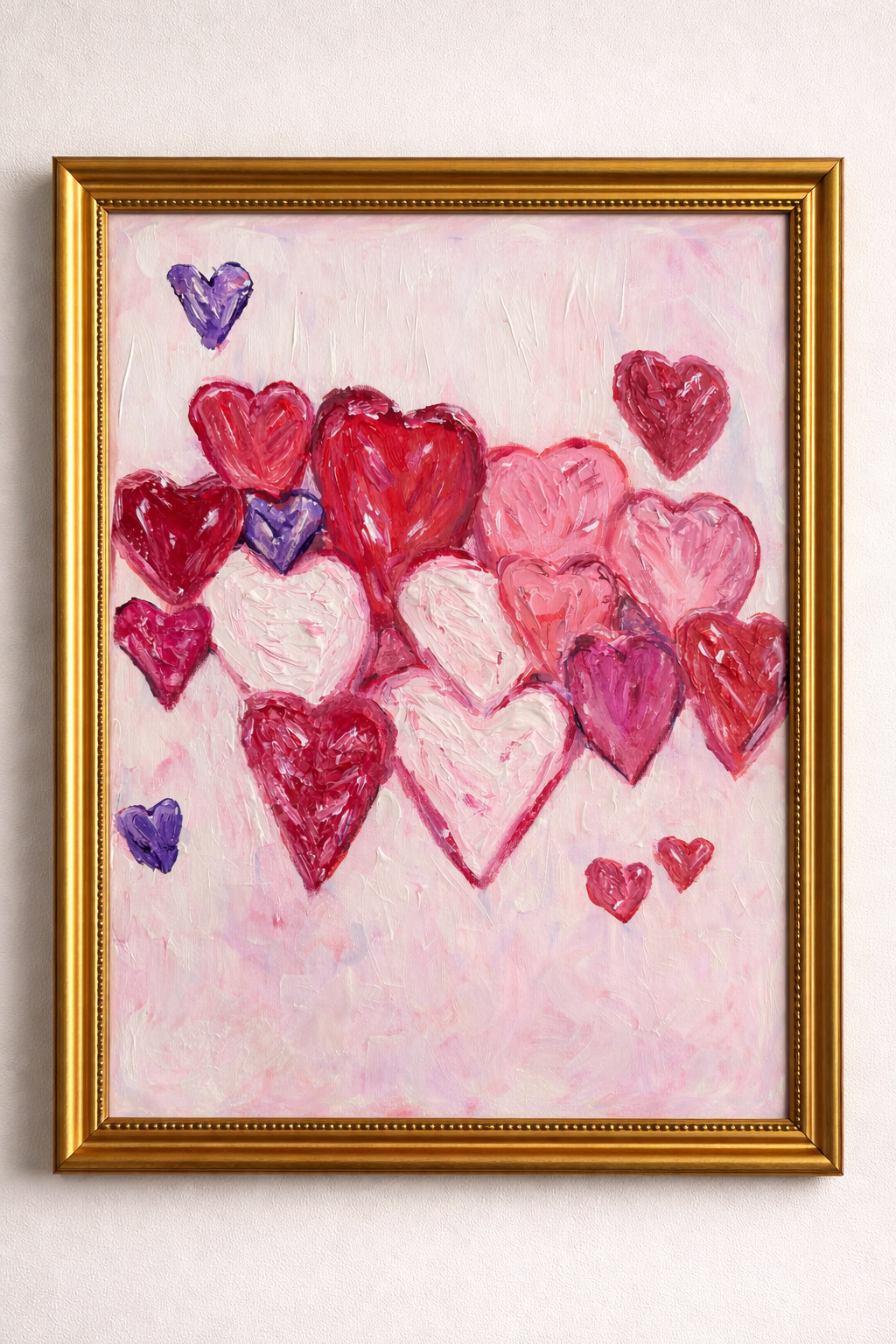 Image 2 of 2
When Hearts Come Together Original Acrylic On Canvas (14" x 14")
When Hearts Come Together
Anthony M.T. Majewski
2026
Acrylic on archival canvas
Original
14 × 14 inches (35.6 × 35.6 cm)
Deeply intimate and emotionally luminous, When Hearts Come Together represents one of Anthony M.T. Majewski’s most personal and psychologically resonant works — a painting born from a period of physical adversity, emotional reflection, and rediscovery through creativity. Executed with layered acrylic texture and expressive spontaneity, the work transcends symbolic abstraction and becomes a profound meditation on healing, resilience, love, and human connection.
Created during a transformative chapter in the artist’s life following a severe spinal injury that temporarily affected sensation and mobility in his arms and hands, the painting emerged organically through the process of rehabilitation and recovery. During this period, painting itself became both refuge and reconstruction — a way to reconnect physically with movement while emotionally navigating uncertainty, frustration, and hope.
Yet despite the deeply personal origins of the work, When Hearts Come Together never descends into darkness. Instead, it radiates optimism, tenderness, and emotional warmth. The clustered hearts appear suspended in a luminous atmosphere of soft pinks, whites, reds, and violets, creating a visual rhythm that feels almost musical in nature. Each heart remains distinct and imperfectly individual, yet unified within the composition — symbolic of the emotional bonds that sustain us during life’s most vulnerable moments.
Central to the emotional gravity of the painting is the quiet but profound influence of the artist’s wife, whose encouragement and support inspired the creation of the work itself. In many ways, When Hearts Come Together becomes not only a reflection on healing, but also a tribute to enduring partnership — the unseen strength that emerges when two people carry one another through difficult chapters of life.
This emotional authenticity is what gives the painting extraordinary significance.
Unlike decorative contemporary heart imagery created for surface appeal alone, Majewski’s work carries lived emotional truth embedded directly into the paint itself. The heavily textured acrylic passages preserve evidence of movement, effort, and rediscovered physical confidence. Every mark feels human. Every gesture feels earned.
Within contemporary art historical dialogue, When Hearts Come Together occupies a compelling intersection between emotional abstraction, autobiographical expressionism, and symbolic contemporary painting. The layered heart motifs evoke the celebrated emotional iconography of Jim Dine, while the physicality of the painted surface recalls the lyrical gestural intimacy of Joan Mitchell and the emotionally vulnerable abstraction associated with Cy Twombly. Yet Majewski’s voice remains uniquely his own — distinctly personal, optimistic, and rooted in genuine human experience rather than conceptual detachment.
Importantly, the work arrives during a period in the contemporary market where sophisticated collectors increasingly seek emotionally authentic paintings tied directly to defining moments within an artist’s life. Historically, deeply autobiographical works created during periods of transformation often become among the most important and sought-after pieces within an artist’s long-term body of work, particularly when they reveal the formation of emotional and visual identity simultaneously.
Majewski’s multidisciplinary contributes to the painting’s unusual emotional rhythm and visual accessibility. Despite its apparent simplicity, the composition possesses remarkable psychological depth. The negative space surrounding the clustered hearts creates openness and vulnerability, while the tactile acrylic surface gives the work a museum-quality physical presence impossible to fully appreciate digitally.
In person, the painting feels both intimate and monumental — delicate in symbolism yet powerful in emotional weight.
Ultimately, When Hearts Come Together is not simply about romance or affection.
It is about rediscovering strength through connection.
It is about healing through creation.
It is about the quiet power of love during moments when life feels uncertain.
For serious collectors, these are precisely the qualities that separate emotionally consequential contemporary art from decorative imagery.
And works carrying this level of sincerity, vulnerability, and autobiographical importance rarely remain overlooked once an artist’s broader narrative begins attracting institutional and collector attention.
When Hearts Come Together
Anthony M.T. Majewski
2026
Acrylic on archival canvas
Original
14 × 14 inches (35.6 × 35.6 cm)
Deeply intimate and emotionally luminous, When Hearts Come Together represents one of Anthony M.T. Majewski’s most personal and psychologically resonant works — a painting born from a period of physical adversity, emotional reflection, and rediscovery through creativity. Executed with layered acrylic texture and expressive spontaneity, the work transcends symbolic abstraction and becomes a profound meditation on healing, resilience, love, and human connection.
Created during a transformative chapter in the artist’s life following a severe spinal injury that temporarily affected sensation and mobility in his arms and hands, the painting emerged organically through the process of rehabilitation and recovery. During this period, painting itself became both refuge and reconstruction — a way to reconnect physically with movement while emotionally navigating uncertainty, frustration, and hope.
Yet despite the deeply personal origins of the work, When Hearts Come Together never descends into darkness. Instead, it radiates optimism, tenderness, and emotional warmth. The clustered hearts appear suspended in a luminous atmosphere of soft pinks, whites, reds, and violets, creating a visual rhythm that feels almost musical in nature. Each heart remains distinct and imperfectly individual, yet unified within the composition — symbolic of the emotional bonds that sustain us during life’s most vulnerable moments.
Central to the emotional gravity of the painting is the quiet but profound influence of the artist’s wife, whose encouragement and support inspired the creation of the work itself. In many ways, When Hearts Come Together becomes not only a reflection on healing, but also a tribute to enduring partnership — the unseen strength that emerges when two people carry one another through difficult chapters of life.
This emotional authenticity is what gives the painting extraordinary significance.
Unlike decorative contemporary heart imagery created for surface appeal alone, Majewski’s work carries lived emotional truth embedded directly into the paint itself. The heavily textured acrylic passages preserve evidence of movement, effort, and rediscovered physical confidence. Every mark feels human. Every gesture feels earned.
Within contemporary art historical dialogue, When Hearts Come Together occupies a compelling intersection between emotional abstraction, autobiographical expressionism, and symbolic contemporary painting. The layered heart motifs evoke the celebrated emotional iconography of Jim Dine, while the physicality of the painted surface recalls the lyrical gestural intimacy of Joan Mitchell and the emotionally vulnerable abstraction associated with Cy Twombly. Yet Majewski’s voice remains uniquely his own — distinctly personal, optimistic, and rooted in genuine human experience rather than conceptual detachment.
Importantly, the work arrives during a period in the contemporary market where sophisticated collectors increasingly seek emotionally authentic paintings tied directly to defining moments within an artist’s life. Historically, deeply autobiographical works created during periods of transformation often become among the most important and sought-after pieces within an artist’s long-term body of work, particularly when they reveal the formation of emotional and visual identity simultaneously.
Majewski’s multidisciplinary contributes to the painting’s unusual emotional rhythm and visual accessibility. Despite its apparent simplicity, the composition possesses remarkable psychological depth. The negative space surrounding the clustered hearts creates openness and vulnerability, while the tactile acrylic surface gives the work a museum-quality physical presence impossible to fully appreciate digitally.
In person, the painting feels both intimate and monumental — delicate in symbolism yet powerful in emotional weight.
Ultimately, When Hearts Come Together is not simply about romance or affection.
It is about rediscovering strength through connection.
It is about healing through creation.
It is about the quiet power of love during moments when life feels uncertain.
For serious collectors, these are precisely the qualities that separate emotionally consequential contemporary art from decorative imagery.
And works carrying this level of sincerity, vulnerability, and autobiographical importance rarely remain overlooked once an artist’s broader narrative begins attracting institutional and collector attention.